
IMPACTIVE brings together not only research groups, but also companies. This is key to ensure that the project’s results move closer to the market. One of these companies is DesSolutio.
DesSolutio is a spin-off from NOVA University Lisbon, founded as a consultancy and mainly focused on sustainable chemistry. This partner was joined IMPACTIVE within WP5, which is dedicated to process scale-up, due to the expertise of its members in chemical engineering.
Translating the language of chemistry into engineering
Within IMPACTIVE, our primary focus is on developing new reactions at laboratory scale using mechanochemistry. However, we also want to ensure that the processes developed in the lab are suitable for scale-up —and this is something that does not happen automatically. Numerous parameters, often overlooked at laboratory level, can have major implications for the overall feasibility of a process at industrial scale. DesSolutio ensures that these parameters are properly considered.
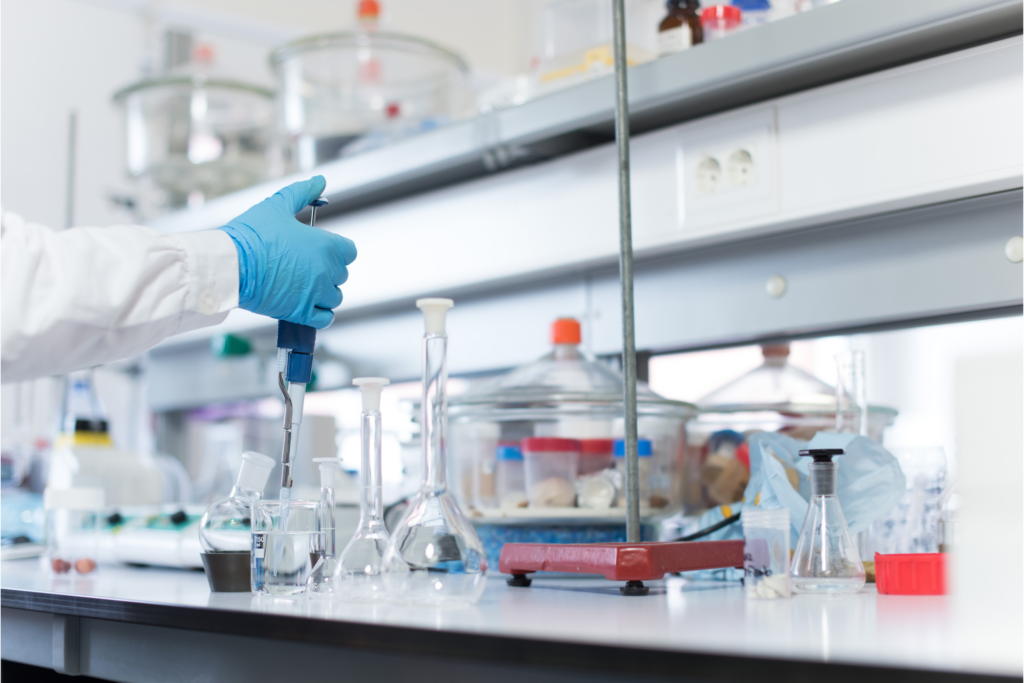
For instance, the amount of water used to wash and purify a product is critical, as in industry this water must be managed in a sustainable way. The same applies to reaction time, which needs to be optimised, as well as energy consumption, reaction temperature and many other factors that require careful evaluation when assessing industrial scalability. These aspects are particularly important as they frequently have economic implications.
We could say that our lab scale researchers speak the language of chemistry, while the DesSolutio team speaks the language of engineering. Part for their work is to establish a common language between the two. During the first months of the project, much of DesSolutio’s effort was devoted to this task, asking our lab-scale researchers questions such as “Is this reaction time really necessary?” or “What is the minimum amount of water that can be used?”. These discussions often required chemists to return to the laboratory to re-evaluate specific parameters and determine whether the reactions could realistically be translated to larger scales.
Bits instead of ball mills
While other WP5 partners work on scaling processes to kilogramme scale using ball mills or extruders, DesSolutio doesn’t have any experimental equipment. Instead, they use computers. The company works with simulation software to translate laboratory processes into larger scales and to model the corresponding industrial plant.
One of the challenges this team faces lies in the novelty of mechanochemistry. Existing simulation software does not perfectly replicate equipment such as extruders or ball mills. As a result, they must treat them generically as reactors and then define the conditions in which these reactions are operating. In this sense, we can say DesSolutio is really opening a path here.
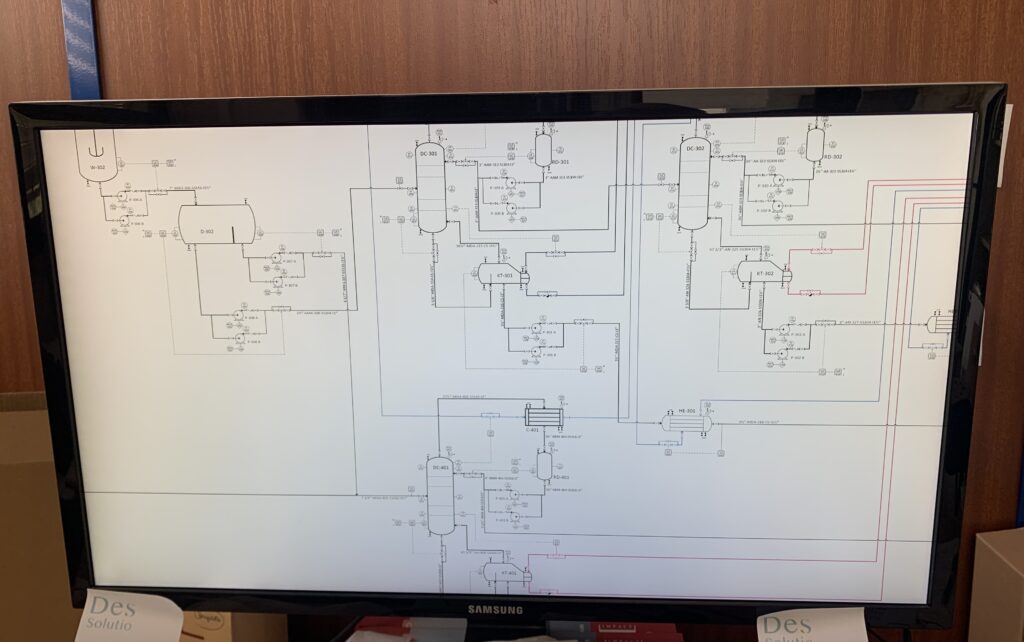
The simulation programme produces detailed process diagrams, showing each stage of the operation: the reactor where materials are mixed, water inputs, additional processing steps, filtration, washing, recovery and drying. Mechanochemistry represents only one part of the overall process. In fact, the reaction itself is just a small part of the full industrial workflow, though still important.
The resulting information goes back to our laboratories. There, we optimise the reaction conditions to check the feasibility. As DesSolutio relies on simulations rather than experimental evidence, is essential to validate and refine its models. Also, the other WP5 partners working with larger extruders or mills provide feedback on the challenges encountered when moving from milligrams to grams and kilogramme quantities. But this feedback loop goes beyond synthesis. Our partners at life cycle assessment (LCA) and techno-economic analysis also benefit from it.
Raising awareness
One of DesSolutio’s greatest contributions to our project has been raising awareness among our chemists of considerations that may initially seem like minor details, but which are critical from an engineering perspective. For chemists, time, water or temperature can appear secondary; for chemical engineers, they are fundamental! This shift in perspective is a significant achievement. It means that in future projects, these considerations could be integrated from the very beginning.