
Applying mechanical stress to substances can trigger chemical reactions. We are proud to say that we can do this without using solvents, only powders. But what if we told you that mechanochemistry can also be carried out in other states of matter, not just solids?
Liquid assisted grinding and solid-liquid mechanochemistry
Adding liquids is such a common practice in mechanochemistry that it even has its own term: Liquid Assisted Grinding (LAG). It is usually carried out when a quantity of solvent, often with catalytic properties, is applied to increase reaction rates or even to enable a reaction that would otherwise not occur. Apart from boosting reaction rates, liquids can also increase yields and enhance chemical reactivity, allowing more reactants undergoing a reaction and, therefore, to obtain higher amounts of product. These effects improve the overall efficiency of the reaction.
The amount of liquid remains very, very small compared with the volumes required in solution-based chemistry. Researchers characterise LAG reactions using the empirical parameter η (eta), expressed in μL per mg of solid reactants. This parameter is used to describe, and normalise, the amount of liquid added. The formal definition of η allows to distinguish, according to increasing liquid content, between neat grinding, LAG conditions, slurry mixes, and reactions in solution.
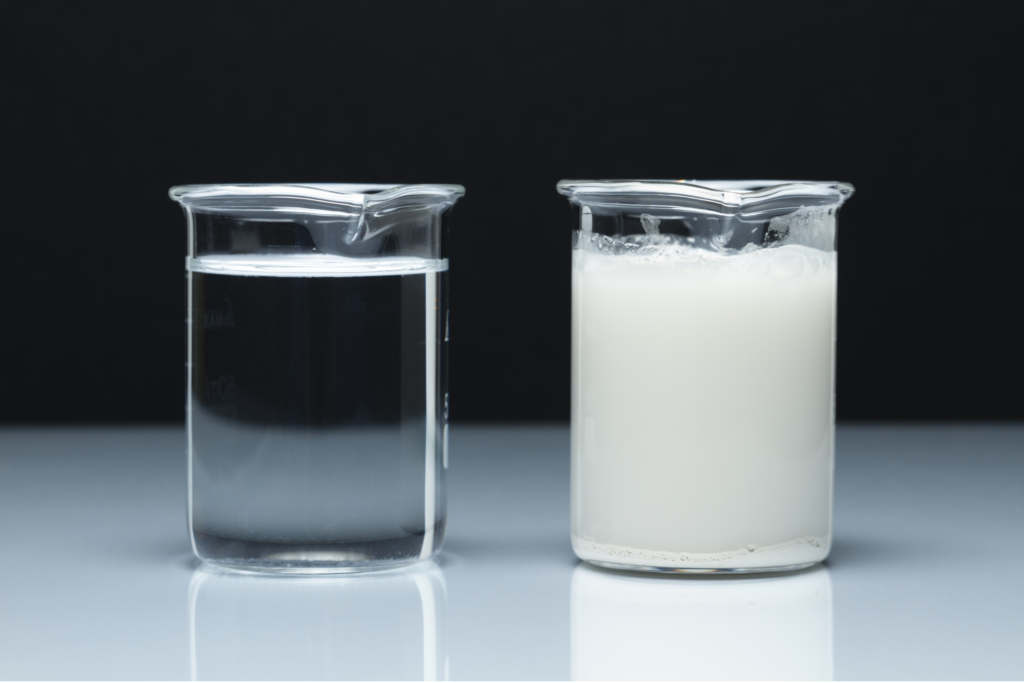
Although one might think that the role of the liquid in LAG is simply to act as a lubricant or to help the reaction proceed, the reality is quite different. The role of liquids in LAG goes well beyond that of a passive facilitator. It can also act as a template that guides the reaction through intermolecular interactions between the liquid and the reactant molecules. Adding small quantities of liquids to mechanochemical reactions can also improve other properties, such as de degree of crystallinity of the products. This improvement enables structural analysis by diffraction techniques and can help with the formation of co-crystals.
While LAG is the most widely studied use of liquids in mechanochemical reactions, we can also find some examples in which liquids are protagonists. Moreover, the liquid added in LAG can sometimes participate in the reaction itself rather than merely assisting it.
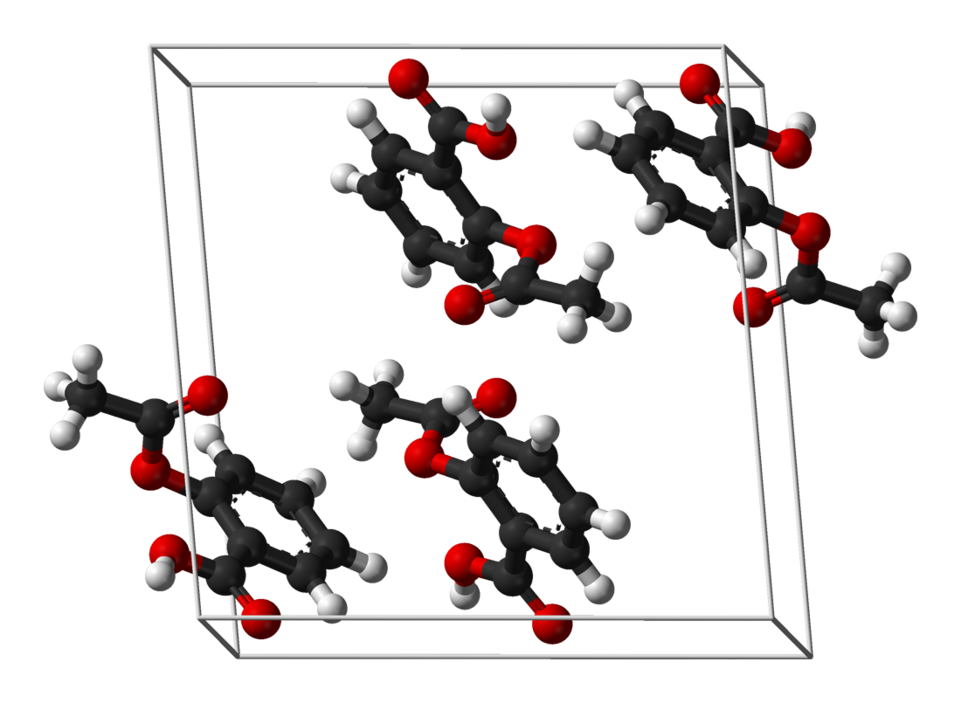
In an article published in Physical Chemistry Chemical Physics, the researchers looked at a hydrogen isotope exchange reaction between solid benzoic acid, a solid organic compound, and liquid heavy water, in which the hydrogen atoms are replaced by deuterium. After ball milling the two reactants together, hydrogen atoms in benzoic acid got replaced by deuterium atoms from heavy water.
Solid-liquid mechanochemical reactions have also been explored to study the crystal structure of organic compounds, as mentioned before. Some organic molecules are difficult to crystallise using conventional solution-based methods. Mechanochemistry can help to crystalise liquids into forms such as multicomponent solids. In addition, the surrounding liquid environment can influence mechanochemical processes in more complex ways, affecting reaction pathways and intermolecular interactions.
Another situation arises when two liquid reagents need to react mechanochemically. When both components are liquids, the reaction may benefit from the addition of a grinding auxiliary, such as sand or a solid base, which provides a solid medium to facilitate the mechanochemical process. This strategy has been suggested in mechanochemical studies to improve the efficiency of reactions involving liquid components.
Mechanochemistry with gases
In the introduction we talked about other states of matter, plural, because mechanochemistry can also happen between gases. Most mechanochemical reactions carried out by ball-milling techniques involve transformations of solids and liquids. While gaseous reactants can be dangerous, and have to be handled with extreme caution, there has been growing interest in this area.
Activating gases by mechanical forces opens new possibilities in chemical synthesis. One of them is the application of heterogeneous catalysts, which are usually solid materials that can react with substances in a different phase. Many of these catalysts are used in reactions involving gases, for example in the reduction of methane and nitrogen oxides (NOx) or in the oxidation of carbon monoxide. Mechanochemistry can be used both to prepare these catalysts and to modify their properties.
Another example in which gases play a role is the functionalisation of graphene. Graphene has unique thermal, mechanical and electronic properties, which is why many studies focus on producing it and modifying its structure. One simple method for producing pristine graphene is the mechanical exfoliation of graphite using ball mills. The result is a low-cost and scalable production of graphene nanoplatelets.
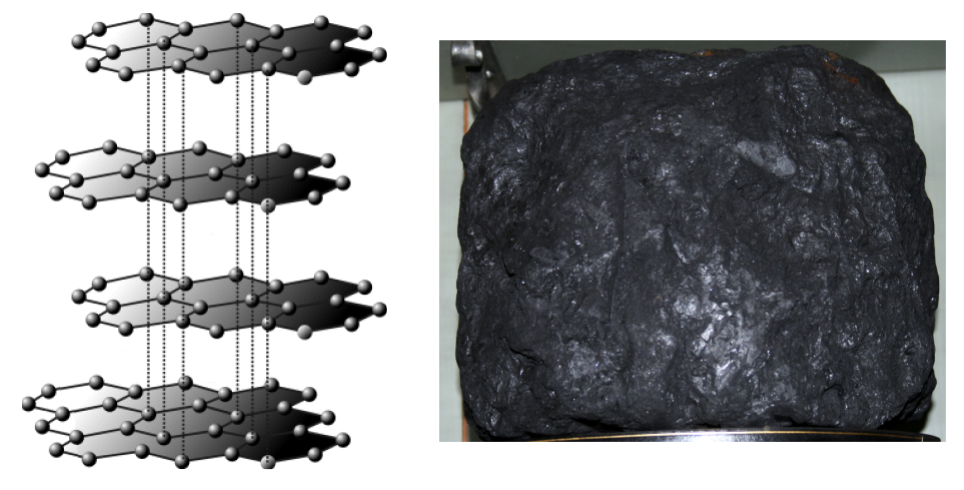
However, researchers have developed another mechanochemical approach in which gaseous molecules react directly with graphite. In this method, gas molecules attach to the edges of graphene layers, which helps to separate them. At the same time, the solid-gas mechanochemical reactions preserve the crystalline graphitic structure while allowing to achieve graphitic materials with tailored properties. Some of the gases used in these processes include carbon dioxide (CO₂), hydrogen (H₂) and nitrogen (N₂).
Organic chemistry, so important for us and for the synthesis of pharmaceuticals, also benefits from gaseous mechanochemistry. The list of examples is quite extensive. Among them we can find the fundamental transformation known as hydroformylation, in which aldehydes are produced by adding carbon monoxide (CO) and hydrogen (H₂) to olefins. Another key industrial transformation is catalytic hydrogenation, which allows the introduction of functionalities in organic molecules. Both metal-catalysed and metal-free hydrogenations have been carried out in the presence of gases under mechanochemical conditions.
The versatility of mechanochemistry knows no bounds Whether working with solids, liquids, or gases, mechanical forces can drive chemical transformations that are difficult—or even impossible—to achieve using conventional methods.