
Scale-up is such a crucial aspect of our work that several partners within IMPACTIVE are dedicated to it. This does not mean that efforts are duplicated; rather, each partner specialises in a different strategy. In this new edition of #MeetOurPartners, let’s discover the work of the School of Engineering and Architecture of Fribourg (HEIA-FR), part of the University of Applied Sciences of Western Switzerland (HES-SO).
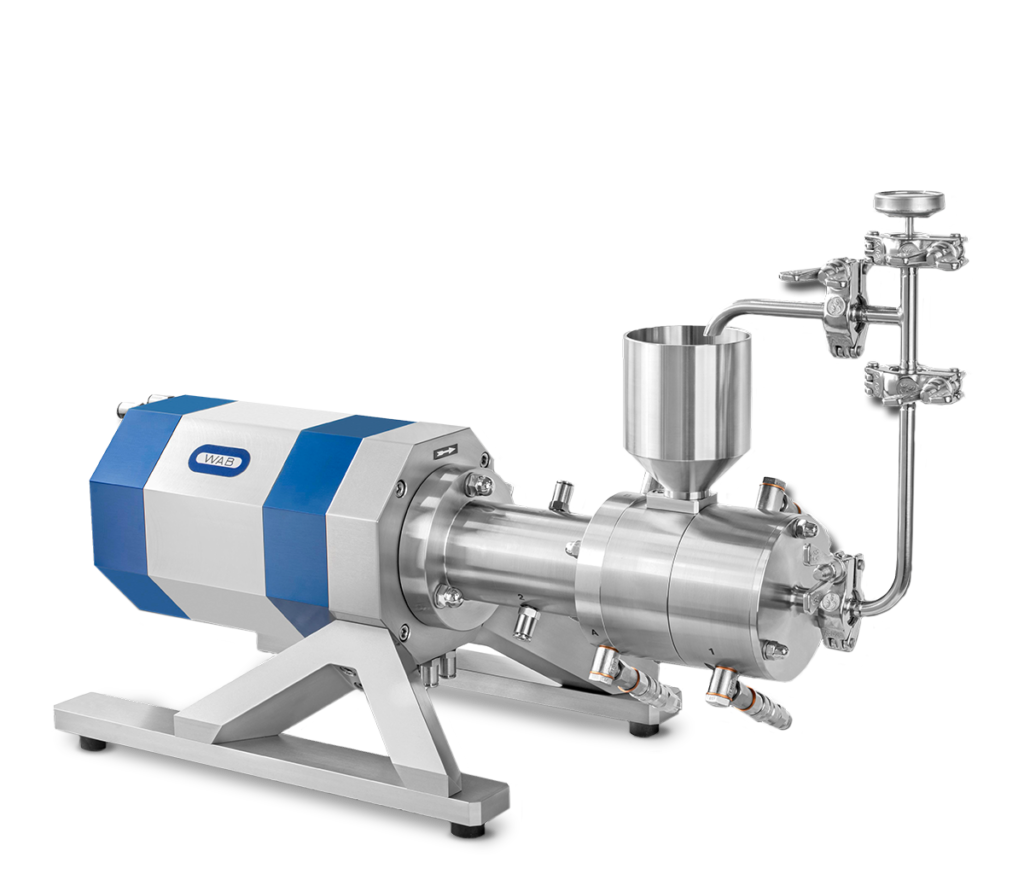
HEIA-FR focuses on scaling up not only continuous processes but also batch processes. Their tool of choice is the Dyno®-Mill, a specialised bead mill reactor widely used in industry for large-scale wet milling operations. This is precisely why it is so valuable for IMPACTIVE: if we want greener pharmaceutical manufacturing to move beyond the lab, we need technologies that industry already understands and uses.
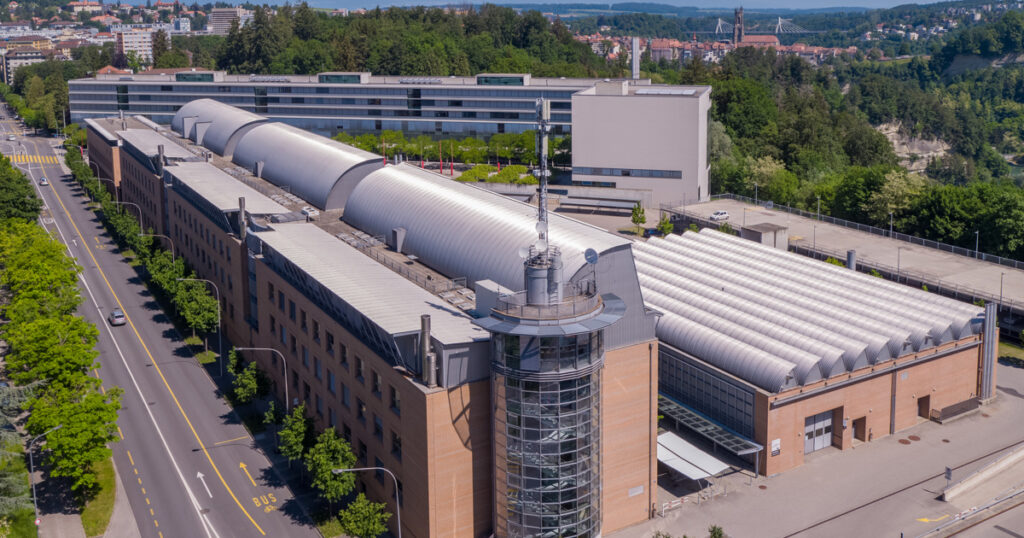
While highly relevant, the Dyno®-Mill is one of the many tools and resources of HEIA-FR, as they have a highly specialised, state-of-the-art infrastructure designed with ATEX industrial standards, that is, prepared for risk of explosions. Their facilities include advanced equipment for process development across scales, with reactors of up to 630 litres, along with safety assessment tools to ensure safe and efficient scale-up. At an academic level in Europe, they are unique in offering such capabilities.
Within IMPACTIVE, this team takes processes developed at laboratory scale in Work Package 2 (WP2) and transfers them to a larger scale using the Dyno®-Mill. We are talking about moving from milligram to kilogram scale. Not bad at all!
But if the Dyno®-Mill is so different when compared to the devices used by other partners, how is it possible to translate the reactions to a larger scale? Well, the procedures and operational parameters must be adapted. HEIA-FR has a good understanding of which parameters are most relevant to start with. In practice, they must re-optimise the process to ensure compatibility with the Dyno®-Mill. Currently, there is no simple equation or direct transfer rule.
For instance, unlike other devices, bead milling does not rely on parameters such as shaking frequency. In the Dyno®-Mill, the team can influence the reaction by adjusting factors such as rotation speed, bead size and bead loading. These changes can accelerate or slow down the process, but understanding how to do this effectively depends today heavily on experience, not only on a predefined scientific model.
However, the main challenge this team faces is not the chemistry itself, but environment, health, and safety aspects (EHS), as well as downstream operations. At small scale, the risks are relatively limited, but as soon as you move to larger-scale processes, many EHS aspects must be considered. This is why, beyond a certain point, specialised facilities with appropriate EHS standards, such as those at HEIA-FR, are essential. Monitoring the reaction to meet these EHS requirements is itself a significant endeavour. Much of the available equipment was originally developed for milling operations, not for carrying out chemical reactions.
Despite all these difficulties, HEIA-FR has already synthesised one active pharmaceutical ingredient using a half-litre reactor and is currently working on a second molecule. While this may not seem like a lot, in the process, they are collecting valuable data on how to safely scale up reactions from laboratory to kilogram scale.